Author Archive

Forum Rules

FORUM GUIDELINES (Please take a moment to read the below rules before posting)

Registration to the Safe4All.org Forum is free!  While participating in the Forum all of the “Rules” must be observed to ensure the Forum remains a friendly and enjoyable place to visit.  Each person who writes a message in the Safe4All.org Forum is responsible for what they write.  Safe4All.org does not assume responsibility, legal or otherwise, for what is written in the Forum areas.  The administrators of Safe4All.org will attempt to catch all of the rule-breaking postings.  It is impossible for us to review all messages.  If we miss one we would appreciate being notified.  If you would like to report a rule-breaking posting, or have any questions or comments regarding the Forum rules, please email us at info@stopabuseforeveryone.org. Thank you for helping to make the Safe4All.org Forum a nice place to visit!

Please read the below rules, if you agree to the terms — select a topic, and start posting!

FORUM RULES:

Please note that: Your postings to this public forum will become public.  The following are the rules that govern use of the Safe4All.org website.  By using the Forum, you agree to be bound by these rules and to follow all applicable laws and regulations governing the website.  Safe4All.org reserves the right to change these rules at any time.  It is your responsibility to remain informed of current Safe4All.org rules and policies.  Additionally, Safe4All.org reserves the right to remove, edit, move, or close any thread for any reason.  Safe4All.org is not liable or responsible for any content provided by its users.

Prohibited Content:

  • Below is a partial list of the types of Content which is prohibited on the Safe4All.org website.  Content that:
  • Is or could be offensive to minors and the online community.
  • Promotes hatred or physical harm of any kind against any group or individual. (These types of postings will be removed and the users account disabled).
  • Solicites “mass mailing”, “junk mail”, or “spamming” our members in any manner. (Users are not prohibited to solicit business through this forum without permission).
  • Promotes information that users know is false or misleading.
  • Promotes illegal activities or conduct which can be seen as threatening, defamatory, obscene, or libelous.
  • Links to sites or images that display pornographic or sexually explicit material of any kind.
  • Encourages illegal intent.
  • Contains ads or other form of advertising. (These types of postings will be removed).
  • Is attacking or slanderous towards MensEnews.org or our staff and/or management in any form, may result in immediate suspension of your account.
  • Provides material that exploits people under the age of 18 in any manner, or solicits personal information from anyone under 18.
  • Promotes an illegal or unauthorized copy of another person’s work.
  • Engages in commercial activities and/or sales such as (contests, advertising, sweepstakes.etc.) without prior written consent from MensEnews.org.
  • Contains restricted or password only access pages, or hidden pages or images (those not linked to or from another accessible page).

DISCLAIMER:

Contributions to this forum by users do not necessarily represent the view or opinions of Safe4ALL.org.  Advice, opinions, suggestions, and other information by participants in this discussion Forum are those of the author.  If users rely on these opinions, suggestions, advice, and information –you do so at your own risk.  Participants in the forums are always encouraged to seek professional advice for their own individual situations.  You should not rely solely on advice, opinions, suggestions given in the discussion Forums.

Users can be held liable for any illegal or prohibited “user content” they provide to the website or to other users — to include defamatory or offensive materials. All content on this website is the property of Safe4All.org.  By using this forum, you agree to hold Safe4All.org, its affiliates, officers, and employees, harmless from any loss or liability that may arise out of your use of the website.


Continue Reading

Ask all women about abuse, says task force

By Medline Plus 6/12/2012

“A government-backed panel on Tuesday recommended doctors ask their female patients about domestic violence they are currently experiencing or may have faced in the past.”

Read the entire article: http://www.nlm.nih.gov/medlineplus/news/fullstory_126207.html 

Continue Reading

Child Welfare Dept. Ignores Brutality to Six Children and One Man

By Robert Franklin, Esq. – SAVE 6/28/2012

“…And control it she did. The children were so terrified of Gonzales-Esquivel that, when they were questioned by authorities, they invariably claimed to have a model home life of peace and harmony. That’s because Gonzales- Esquivel had threatened severe repercussions if they told the truth. …”

Read the entire article: http://www.saveservices.org/2012/06/child-welfare-dept-ignores-brutality-to-six-children-and-one-man/

Continue Reading

Join Our Media Corp

Interested in making a difference in how domestic violence issues are reported on? Want to only volunteer 5 or 10 minutes at a time, from your own home?

Stop Abuse For Everyone has started up the Stop Abuse For Everyone Media Corps. Every day, we send out postings of news articles from around the world that cover domestic violence, and suggest ways you can write short, polite letters to the reporters, editors, and agencies involved to encourage them to include everyone who is abused in their services. To join, write safe@safe4all.org

SAFE Media Corps

Do you want to see more inclusive media coverage of domestic violence? Coverage that includes women and men, gay and straight, young and old? The SAFE Media Corps is an easy way to make a huge impact, all on only 5-10 minutes a week.

Several times a week, we send out postings of news articles from around the world that cover domestic violence, and suggest ways you can write short, polite letters to the reporters, editors, and agencies involved to encourage them to include everyone who is abused in their services.

To partipate:

  1. Join our SAFE Media Corps forum. Click on “request notification” to receive email alerts.
  2. Read our resources on domestic violence.
  3. Consider also subscribing to the SAFE blog, which contains news items related to domestic violence, and is closely tied in with the SAFE Media Corps.

To become a Media Corps Organizer:

Continue Reading

abusedmen

Books of Interest (OLD)

Books on Domestic Violence

abusedmen Abused Men: The Hidden Side of Domestic Violence
by Philip W. Cook
Praeger Publishers 1997
Westport, CT
ISBN: 0-275-95862-0
Amazon’s summary: “When most people think of domestic violence, images of battered women or abused children come to mind. But there is another side to this issue that is not as familiar–abused men. This unique book is the first to comprehensively examine this important but neglected social issue. Already praised by a diverse spectrum of readers–from “Dear Abby’s” Abigail Van Buren, to the nation’s leading domestic violence researcher, to those in law enforcement and counseling–this work is sure to spark controversy and discussion. It offers gripping, emotional stories, self-help for victims, and provocative insight into public issues, and provides a basic reference source for professionals. Abused Men presents practical solutions for reducing domestic violence, whether its victims are male or female.”

A website with more information about the book is located at: http://www.abusedmen.com

Screen Shot 2018 02 27 at 9.42.22 AM                                                                                                                                                                                                                         The Badass Girl’s Guide: Uncommon Strategies to Outwit Predators, by CJ Scarlet, of the SAFE Speakers Bureau.

The Badass Girl’s Guide: Uncommon Strategies to Outwit Predators is the one book criminal predators don’t want you to read. Filled with critical information about how to empower yourself to keep from becoming a crime statistic, this definitive, comprehensive guide contains facts and strategies not found in other personal security books. From tips on how to “fail” the predator interview and avoid being targeted, to instructions on using your personal bodily “weapons” to defend yourself in a confrontation, CJ Scarlet offers everything you need to know to stay safe, fight if you must and navigate the criminal justice process if the worst happens.

Although this book and its title are geared to appeal to women readers, the content is essential reading for anyone who wants to protect themselves, whether they have already been victimized or just want to be proactive about their safety. If you read just one book on personal safety and self-defense in your lifetime, The Badass Girl’s Guide: Uncommon Strategies to Outwit Predators is the one for you!


  • Domestic Violence: The 12 Things You Aren’t Supposed to Know by Thomas B. James is a well-researched book on domestic violence, which looks at how it affects abused men and other groups typically left out of the picture (reviewed by Dr. Jack Turteltaub)
  • Elusive Innocence: Survival Guide for the Falsely Accused by Dean Tong. Description: “This book is a training manual for the defense for those falsely accused. By providing actual case studies, his own included, the author shows the destruction that is incurred by families due to false allegations of child abuse. Having been falsely accused himself, the author gives the pitfalls and shows how to combat and defeat false abuse allegations. ” (added 9/13/01) Note that purchasing using this link gives a 5% donation to SAFE, with additional cost to you.
  • Violent Betrayal: Partner Abuse in Lesbian Relationships by Claire Renzetti (Sage Publications, 1992) is a book for people interested in finding out more about abusive lesbian relationships.
  • Violence in Gay and Lesbian Domestic Partnerships, by Claire Renzetti (editor).
  • A Professional Guide to Understanding Gay and Lesbian Domestic Violence: Understanding Practice Interventions. McClennen & Gunther (1999).
  • Reclaiming Your Life: the Gay Man’s Guide to Love, Self-Acceptance, and Trust, by Rik Isensee. One reader on Amazon reviewed the book as so: “This book was formerly titled “Growing Up Gay in a Dysfunctional Family: a Guide for Gay Men Reclaiming Their Lives”. The author goes very indepth in describing the makeup of abusive, homophobic families and the impact it has on a gay child growing up. While I myself did not grow up in this type of environment, I still learned a great deal about my own reactions to outside homophobia and that for years I internalized it and developed negative thinking patterns about myself; etc. I thank the author for writing this book, not only for helping me identify problems I needed to work through, but for helping me realize how to develope the skills needed to self nurture and stop internalizing homophobia. Above all, this book is especially relevant to abuse survivors, it will definitely help you.”
  • Waking to Tears: Losing a Loved One to Violence by Traci Bieber Nelson “It is a compilation of stories from people across the globe who have lost a loved one to violence. One of the aspects of the book is that the author includes many different types of violence, including male victims.” (added 9/26/01) Note that purchasing using this link gives a 5% donation to SAFE, with additional cost to you.
  • Same Sex Domestic Violence: Strategies for Change, by B. Leventhal & S. Lundy, Ed., Corwin Press, 1999. Amazon’s description: This comprehensive resource book examines a broad range of issues that confront the victims of same-sex domestic violence and those who offer them services. Chapters include topics of practical concern, HIV, same-sex domestic violence, establishing safe-home networks for battered gay men, courtroom advocacy, coalition building and dating violence prevention.
  • No More Secrets: Violence in Lesbian Relationships. Amazon’s description: In No More Secrets: Violence in Lesbian Relationships, University of Manitoba women’s studies professor Janice Ristock presents one of the first studies of lesbian domestic violence. Basing her work on interviews with victims and social workers, she evaluates firsthand testimony, piecing together how and why lesbian relationships become violent and how the medical and criminal justice systems react when they do. The book concludes with suggestions for battered individuals and for wider community action.
  • Intimate Betrayal: Domestic Violence in Lesbian Relationships, by E. Kaschak, Ed., Haworth Press, 2002.
  • Women to Women Sexual Violence-Does She Call it Rape?, by L. Girshick, Northeastern University Press, 2002. The American Library Association’s review on Amazon’s webpage says: “Perhaps the most isolated crime victims are lesbian and bisexual survivors of woman-to-woman sexual violence. Multifaceted sexual-identity issues combine with shame and institutionalized heterosexism to make society unable to acknowledge such assaults. The legal system, women’s support services, and the lesbian community are just beginning to name such behaviors, let alone confronting and dealing with them. Women’s studies professor Girshick breaks new ground as she plumbs the experiences and thoughts of 70 women, gleaned from a nationwide U.S. survey and in-depth interviews. She documents the women’s responses to the violence, whether they received or were denied aid, and whether silence was imposed on them. Her insightful and provocative work well may stir controversy even as it sheds light on a previously shadowed subject. Dedicated to “those who are still silenced,” the book also powerfully explores the need for community and such preconceived notions and myths as lesbian utopia. A worthy addition to the sociology of violence in women’s lives”
  • Lobel, K (Ed.). Naming the Violence: Speaking Out About Lesbian Battering. by Kerry Lobel, Seal Press: Seattle, WA, 1986. The Publishers Weekly on Amazon’s website says this: “From Publishers Weekly Sponsored by the Lesbian Task Force of the National Coalition Against Domestic Violence, this book is “by and for battered lesbians and those who work to support their empowerment.” Contributors note that the topic is especiallydifficult for lesbians because, as Barbara Hart, an activist lawyer, states in the preface, lesbian battering “contradicts our belief in the inherent nonviolence of women,” and publicity about it “may enhance the arsenal of homophobes.” Lobel alternates personal histories with commentary by counselors, activists and others who offer advice on how to treat victims and how to deal with the problem generally. (They note the many parallels to man-woman battering cases.) The victims’ stories are wrenching: one battered woman has become so suspicious that when she sees an adult and several girls flying kites in a park (while she writes her contribution to this volume), she remarks only, “I hope that their relationship is as loving and playful as it looks.” This collection constitutes a challenge to lesbians who abuse their lovers and to those who tolerate such abuse.”
  • Men Who Beat the Men Who Love Them.
  • Aider les Hommes Aussi (in French) is a book by a McGill University professor that describes how social workers & health professionals can better serve men. See http://www.mcgill.ca/public/reporter/05/dulac/
  • Insult to Injury: Rethinking Our Responses to Intimate Abuse, by Linda Mills, Ph.D., J.D.. Linda Mills is on the SAFE Speaker’s Bureau. (reviewed by Dr. Jack Turteltaub)
  • Domestic tyranny : the making of American social policy against family violence from colonial times to the present, by Elizabeth Pleck.
  • The Anger Workbook for Women: How to Keep Your Anger from Undermining Your Self-Esteem, Your Emotional Balance, and Your Relationships by Laura Petracek. Description: “Although men and women can articulate anger in very different ways, books on managing problem anger tend to focus on men and their tendency toward more violent anger expression. This workbook addresses the unique concerns of women with anger problems. Rigid social patterning, the book argues, conditions many women to stifle or deny their anger, and this repression can cause a range of other psychological problems. Others experience violent, outwardly focused anger. Whichever pattern your anger follows, you’ll learn healthier ways to express your anger from this workbook. Building on women’s tendency to be more relational than men, this book advocates interactive techniques as a primary method of anger management intervention. It integrates elements of narrative, art, and music therapy into a powerful set of anger management tools. Cognitive behavioral and attitude adjustment exercises help you limit the power of anger-triggering situations. Worksheets and assessments guide you in an examination of family-of-origin issues that might contribute to your problems with anger. Sections of the workbook explore the connection between anger and substance abuse, mood disorders, and spirituality, as well as the issue of domestic violence in lesbian households.” (added 4/19/05) Note that purchasing using this link gives a 5% donation to SAFE, with additional cost to you.
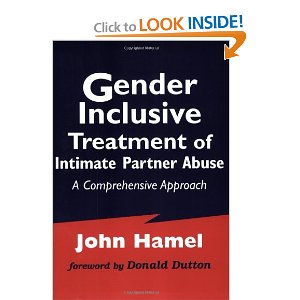
  • Gender-Inclusive Treatment of Intimate Partner Abuse: A Comprehensive Approach, by John Hamel, of the SAFE Speakers Bureau.

Continue Reading

About Us Picture

About SAFE

About safe

Stop Abuse For Everyone (SAFE) is a national non-profit that provides unique services for domestic violence victims and helps those who typically fall between the cracks of domestic violence services. The information we provide is for (but not limited to) straight men, LGBT victims, teens, and the elderly. SAFE works to bring community awareness to injustices that the media and other organizations tend to overlook. We promote the necessity for services for all victims and accountability for all perpetrators.

Our organization views domestic violence as a human rights issue.  If you are in an abusive relationship, services should be available to you regardless of gender, sexuality, or age. We work to enlighten communities on different types of issues individuals face that are often underrepresented.  Through our educational, media, and training programs, we inform the public on what to do if they become a victim. SAFE strives to address individual concerns and provide information to fill in the gaps in domestic violence services.
About Us Picture


Continue Reading